When I analyze price action, I completely ignore the noise of the news cycle. The reason is simple: mass human psychology, when quantified across millions of decisions, always organizes itself into distinct, repeating geometric structures. The foundational engine of this movement is what I call the 5-Wave Impulse.
In classical Elliott Wave Theory, markets do not move in straight lines; they move in fractals. A motive (or impulse) wave is the directional phase of a trend, and it consistently subdivides into a strict five-wave sequence. Understanding this structure is the very first step I take when mapping any chart.
The Anatomy of a Motive Wave
A standard impulse wave consists of five distinct sub-waves, labeled 1 through 5. Waves 1, 3, and 5 are directional, propelling the structure forward. Waves 2 and 4 are corrective, momentarily retracing the progress of the directional waves before the dominant geometry resumes.
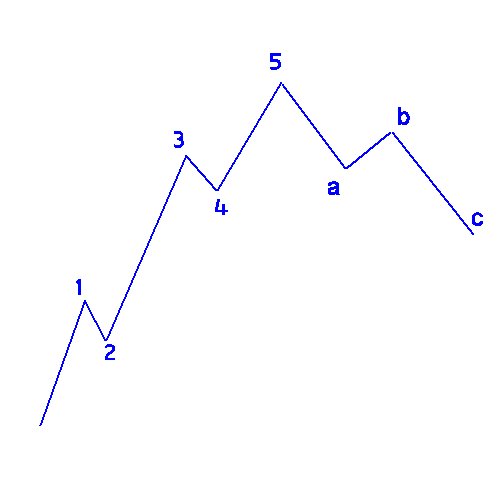
When I am counting a potential impulse structure, I cannot simply guess. The geometry must adhere strictly to mathematical parameters. If a structure breaks these parameters, it is not an impulse wave, and I immediately discard the count.
The Three Immutable Axioms
Every valid 5-wave impulse must satisfy three absolute rules. If even one is violated, the structure is corrective, not motive.
- Wave 2 never retraces more than 100% of Wave 1. The origin point of the first wave is sacred. If price breaches that origin, the structural thesis is instantly invalidated.
- Wave 3 is never the shortest wave. When comparing the directional waves (1, 3, and 5), the third wave is typically the longest and most aggressive extension, but mathematically, it can never be the shortest of the three.
- Wave 4 never enters the price territory of Wave 1. With the rare exception of a diagonal formation, the absolute peak of Wave 1 and the absolute trough of Wave 4 must never overlap. This maintains the structural integrity of the expansion.
Fibonacci Proportions in Impulse Extensions
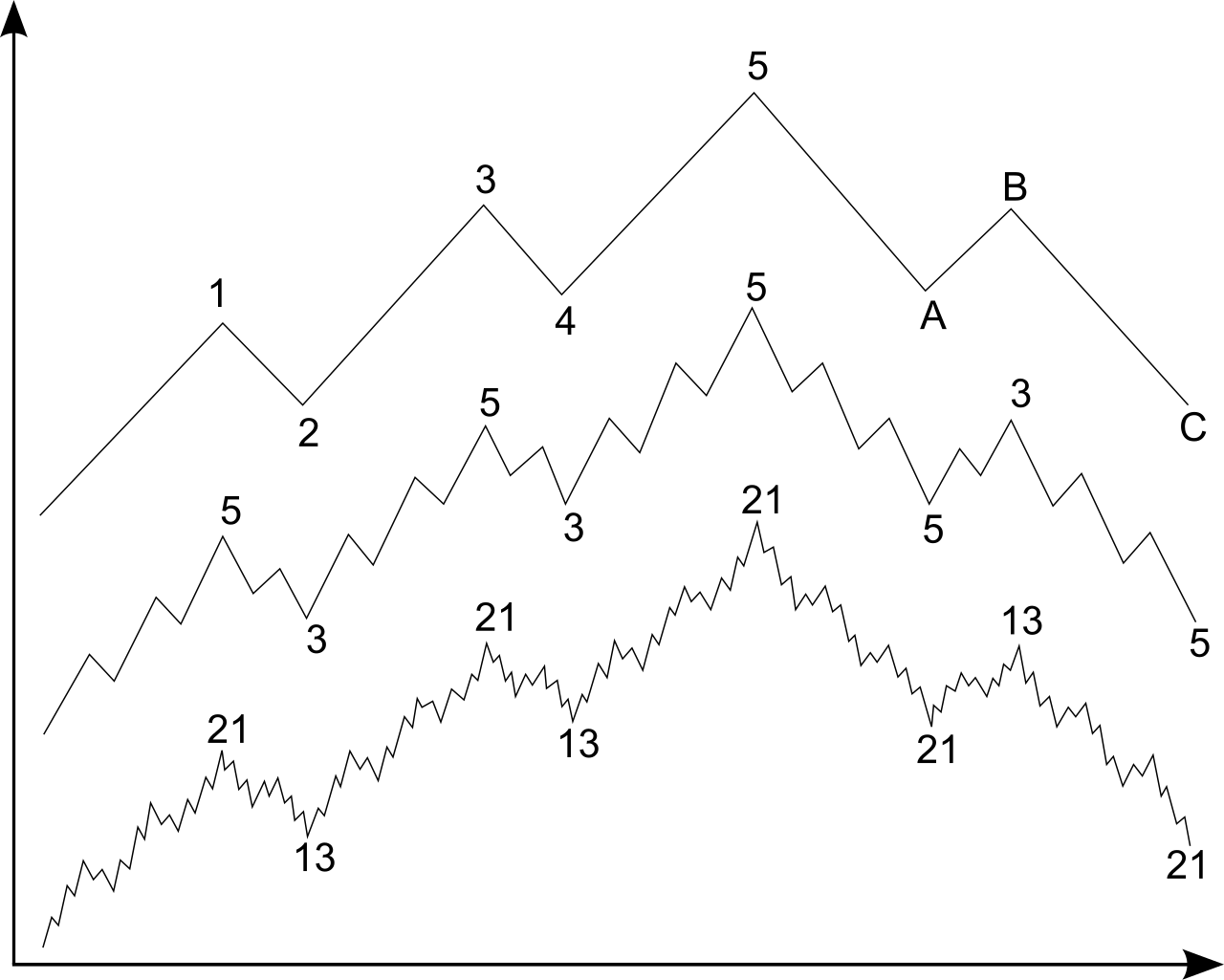
Beyond the strict geometric rules, I rely heavily on Fibonacci mathematics to anticipate wave terminations. Because these waves are fractal expressions of mass psychology, they naturally adhere to the Golden Ratio (1.618).
When I map a standard impulse, I expect one of the three directional waves (usually Wave 3) to extend. If Wave 3 extends, it will frequently reach a 1.618 or 2.618 Fibonacci projection relative to the net displacement of Wave 1. Conversely, if Wave 3 is extended, I look for Wave 5 to exhibit structural equality with Wave 1, moving in a 1:1 ratio.
By treating the market not as a chaotic environment, but as a rigid mathematical environment, I remove subjective emotion from my analysis entirely. The structure either validates the rules, or it does not.

Leave a Reply